
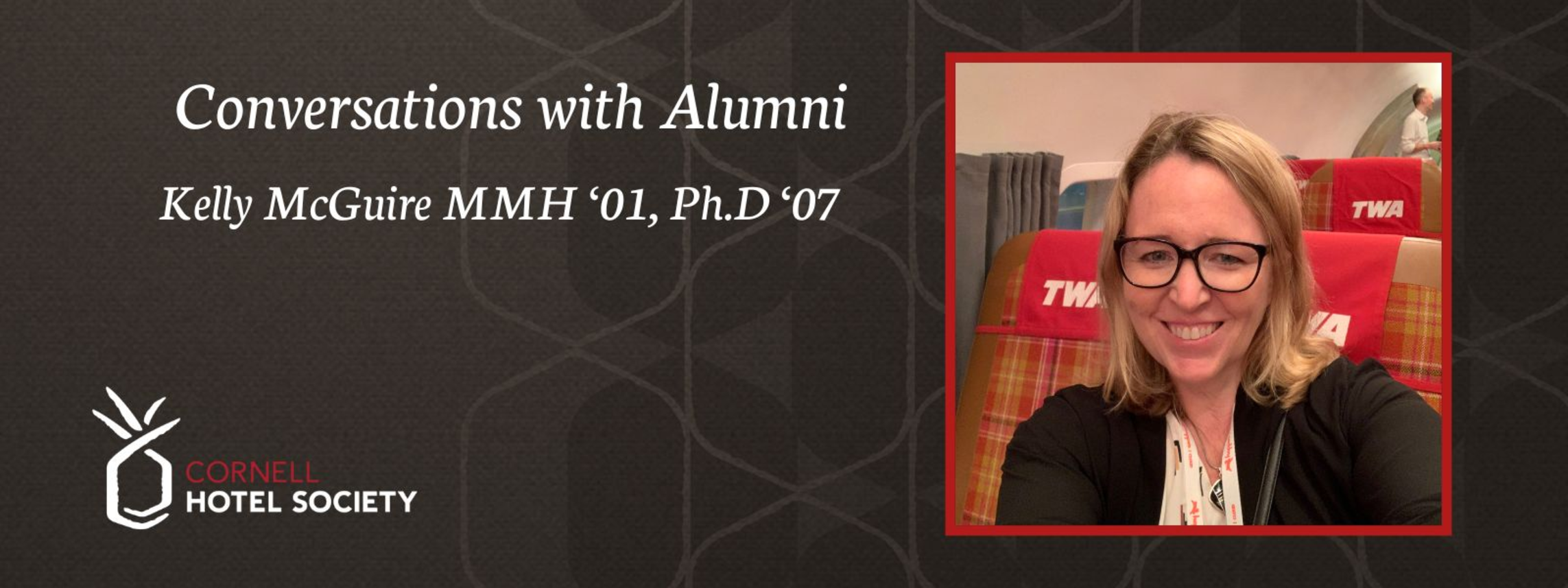
“Conversations with Alumni” – Kelly McGuire MMH '01, Ph.D. ’07
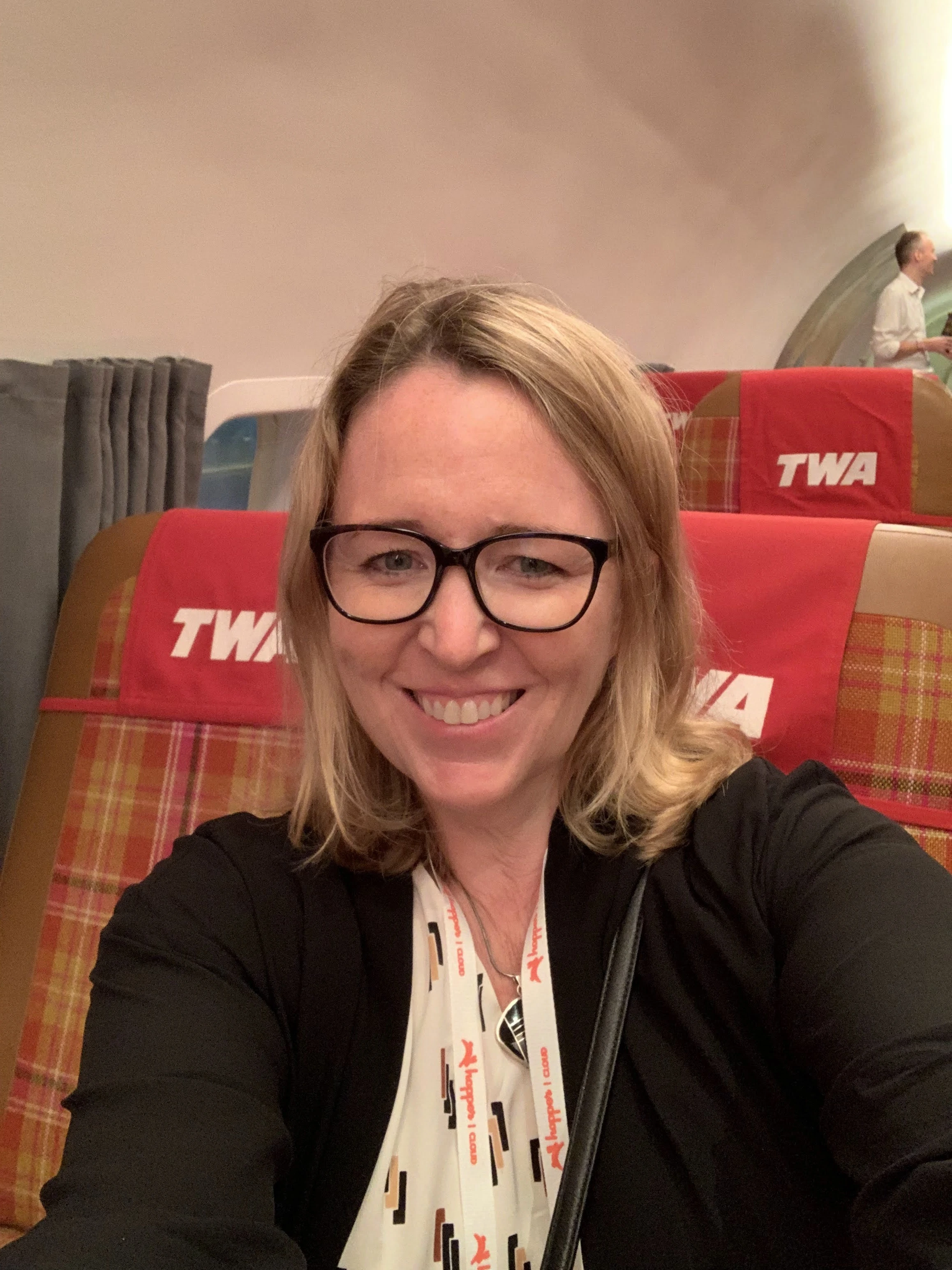
Sam Kimball ‘27 had the opportunity to interview Kelly McGuire Ph.D. ’07, Principal at ZS.
Where did you grow up?
I grew up about an hour away from Ithaca in a small town called Geneva, NY. I would joke with my classmates during the MMH program that when I was in high school we would come to Ithaca for fun! My folks still live in the area, so I still have deep connections with the Finger Lakes.
How would you describe your undergraduate experience at Georgetown University and how did you transition to seeking a career in hospitality?
I completed my undergraduate degree at Georgetown University because I loved Washington, D.C. My family was big supporters of Georgetown basketball when I was growing up, and our love for the team was a reason why I applied to Georgetown. I started working in restaurants in high school and loved it. I continued working in restaurants at Georgetown, including summers. Before I finished school at Georgetown, I knew I wanted to transition to a career in hospitality. Additionally, I knew Cornell would be the best school to attend in order to further my education.
After graduating from Georgetown, I moved to New Orleans to start my hospitality career. I wanted to continue working in restaurants and understood the strength of the New Orleans market. While there, I managed a family-owned Creole restaurant and a Ben and Jerry's franchise.
I applied to Cornell with the intention of pivoting from restaurant operations to hotel operations. I enjoyed the service aspect of the hospitality industry, and I was hoping to see that from the hotel side as well.
What sparked your interest in revenue management?
Sherri Kimes taught a short session on revenue management in our Quant class first semester of MMH. As soon as I learned about it, I realized revenue management is the perfect blend of hard core data science, consumer behavior and operations. I nerd out over anything related to data and avidly follow consumer behavior research, but I believe the real key to success in revenue management is the foundation in operations. The implementation of revenue management happens at the property, so you need to understand how everything works and works together from housekeeping and front desk to digital marketing and sales to really appreciate the levers you can pull to drive profitable revenue. I always say it’s the perfect blend of all of my favorite things about hospitality!
Of course, if you ask my family, they’ll say it is in my DNA. My father was an economics professor at Hobart and William Smith for 42 years. He’ll tell you he taught me supply and demand at the dinner table growing up, so you can imagine he was really pleased when I came home after first semester at Cornell talking about hospitality revenue management!
What was your first job after graduating from Cornell and how did you make the decision to come back for your PhD?
While I was interested in revenue management, I also was passionate about technology, data, and analytics. I evaluated different jobs before making my ultimate decision to work for a technology company that provided back-office operations support for the food service industry. I had always been interested in how technology could support improvements in efficiency, accuracy and guest experience, so this was a great opportunity for me to apply what I learned in the MMH and also advance the industry. At the time, I was working on one of the very first “software-as-a-service” applications in our industry. In fact, it was such early days (and it wasn’t that long ago, mind you!), we didn’t even call it that. Looking at the industry today, it’s amazing to see the extensive advancements in technology applications and how they are leveraged by all areas of the business!
Professor Sherri Kimes called me a couple of years into this job. She was accepting PhD students and was researching applications of revenue management not just in the hotels, but for restaurants, golf, and spa as well. I always wanted to follow in my Dad’s footsteps with the PhD, and the opportunity to work with Professor Kimes was just too good to pass up. The PhD program would allow me to continue to build my expertise in a critical area of focus for the hospitality industry.
How has artificial intelligence and machine learning played a role in your current position?
Today I am a partner at ZS Associates, a mid-sized consulting firm where I work with our hospitality clients. Our firm is rooted in data and analytics, so the strategies and solutions we provide tend to have some analytics applications, including artificial intelligence and machine learning. That said, I don’t think there’s any role in hospitality today that isn’t touched in some way by AI. I think that as long as the industry approaches these opportunities with open eyes, there will be more benefits than drawbacks.
For example, labor shortages that were beginning to emerge pre-pandemic were dramatically accelerated as the recovery began and are still impacting the industry today. This impacts every role and level from front lines through corporate. If we can take all the crappy, highly manual, highly routine and repetitive work off of people’s plates and allow them to focus on the more engaging, human-centric work, we will need fewer people, and the jobs themselves will be better, reinforcing the attractiveness of our industry.
Recently I’ve been working on automation solutions for our clients which infuse AI algorithms into a workflow to replicate human actions in a process. For example, AI can structure complicated guest requests, pass that structured information (which properties, dates, room types, experiences the guests are looking for) to a bot which retrieves availability and rates, and then surfaces a “structured” response back to an agent, who can work with the guest. This leaves the agents free to spend more of their time interacting with guests (and selling), as opposed to interacting with back-office systems. Of course, the AI could craft the response back to the guest too, it all depends on how hotel companies want to deploy their human capital versus automation solutions.
When it comes to revenue management, there’s always a lot of talk about using AI to “optimize pricing”. The revenue management systems out there today have a bit of AI sprinkled in where necessary, but frankly, I think the much more interesting application today is to support all the revenue managers activities around the solutions that calculate day to day pricing. AI can help revenue managers find insights about demand patterns and guest behavior in large volumes of structured and unstructured data as they build revenue strategies. It can give revenue managers a head start in writing commentary on the various reports they send to stakeholders. Proper applications of AI in every domain in hospitality will be hugely impactful in driving both efficiency and effectiveness, and revenue management will be no exception.
 What advice would you give to current and future Nolan students?
This notion of analytics, of use of data, technology and AI is pervasive and is entering in every aspect of both our personal and professional lives. The degree to which you can expose yourself to all the opportunities there, the more useful you will be to your future employers. Additionally, I would encourage you to push yourself to understand the ethics of AI including how the data is being used, how we respect people’s privacy, and how we keep algorithms from being biased.
If you are interested in hospitality sales, hospitality marketing, or hospitality revenue management, know that the notion of a commercial function and of a more wholistic “commercial strategy”, as opposed to revenue strategy, marketing strategy, sales strategy, is being talked about a lot in industry. This means if you are interested in one, it would benefit you to have some exposure to all three. In fact, given its prevalence in industry today everyone would benefit from a high level understanding of what revenue management is, what the levers that revenue management use are, why it works, and what benefits are possible.
Finally, you are privileged to have access to the Cornell Hotelie network, and it is powerful. It’s helped me immensely in my career and it will help you as well. Please keep in mind, however, that this is a small community, and we all know each other. Be careful that you are always comporting yourself with dignity and respect, but don’t be afraid to reach out and ask for help. We are all here for you, as we are for each other!